
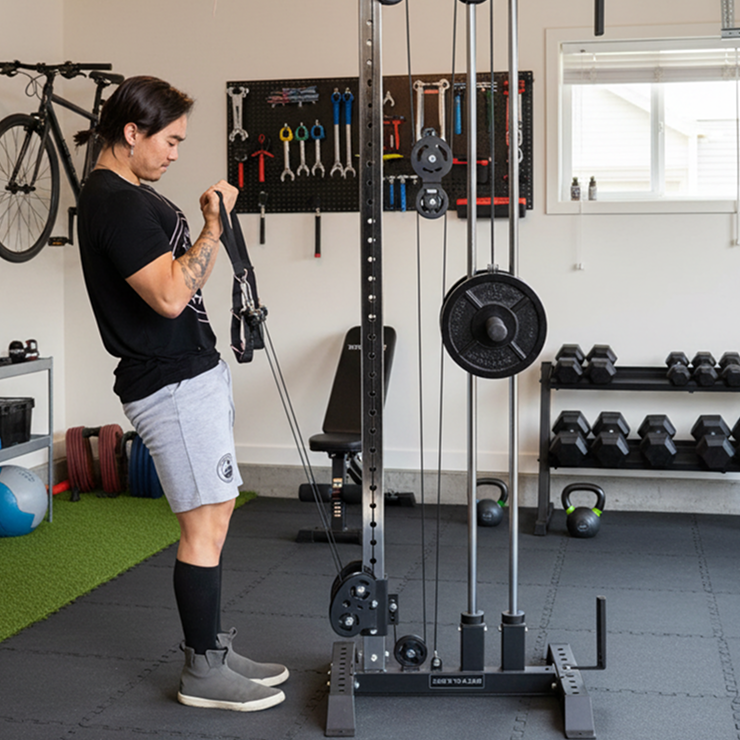
One Station.
Full-Body Power.
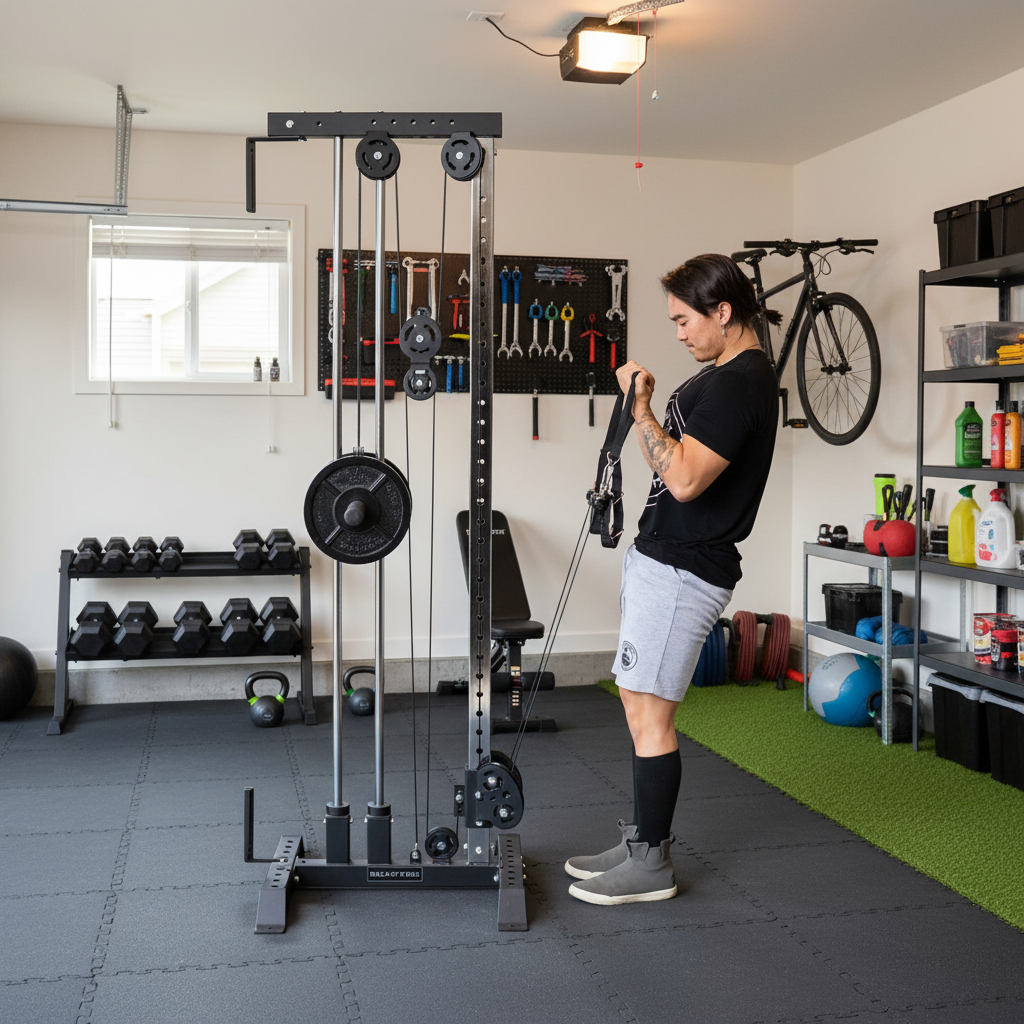
Cable towers turn a single machine into your full‑body training hub — offering adjustable pulleys, endless exercise angles, and enough resistance variation to target everything from core and arms to legs and back.
Your Gym's Most Versatile Machine
From rows to presses to curls, hit every muscle without swapping machines.
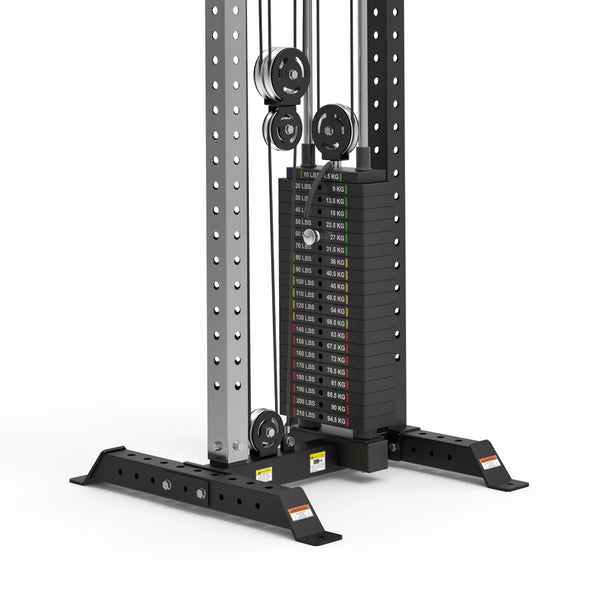
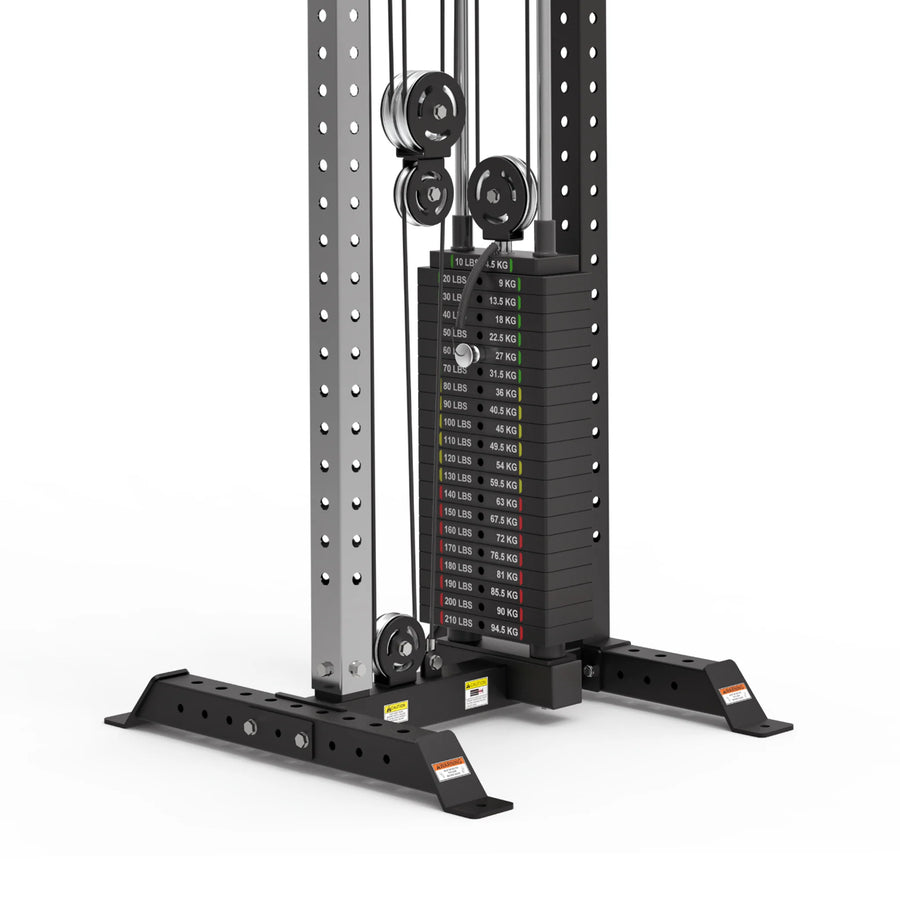
Cable Tower Weight Stack
Pros
- Can be paired with another plate-loaded tower to create crossover or functional trainer setups
- Quieter and smoother operation compared to plate loading.
- Dual-handle pulleys support both bilateral and single-arm movements
- Compact, clean setup with no loose plates
Cons
- Higher upfront cost than plate-loaded models
- Maximum resistance limited to the included weight stack
- Heavier unit makes installation more demanding
Best For:
Home gym owners who prioritize convenience, speed, and a polished training experience, and want quick weight changes without handling plates.
Compatibility
Weight stack towers are self-contained systems and are only compatible with matching weight stack frames. They do not integrate with plate-loaded towers, Oblivyon, or Kolossyem systems.
Best For:
Home gym owners who prioritize convenience, speed, and a polished training experience, and want quick weight changes without handling plates.
Compatibility
Weight stack towers are self-contained systems and are only compatible with matching weight stack frames. They do not integrate with plate-loaded towers, Oblivyon, or Kolossyem systems.
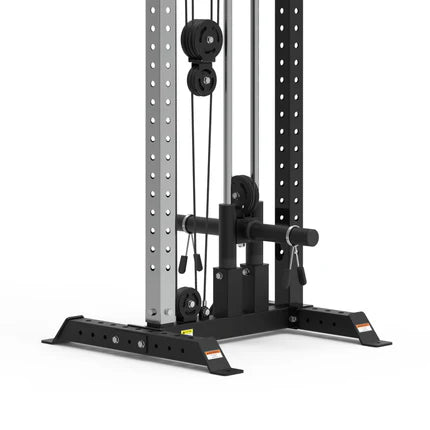
Cable Tower Plate-Loaded
Pros
- More affordable entry point than weight stack models
- Uses standard 2" Olympic plates, allowing fully customizable resistance
- Steel frame, smooth pulleys, and durable cables
- With the included 2-to-1 cable adapter, you get a 1:1 pull ratio meaning the weight on the stack equals what you lift
Cons
- Must Be Bolted Down: Every tower requires bolting to the floor, wall, or rack for safety
- Ships Unassembled: All models require full assembly
- Plate-Loaded Versions Can't Always Upgrade
Best For:
Most home gym owners. Serious lifters who want flexibility without premium pricing.
Compatibility
Standard Cable Towers can be paired to form crossover or functional trainer setups, while Oblivyon and Kolossyem towers use different frames and aren't cross-compatible.
Best For:
Most home gym owners. Serious lifters who want flexibility without premium pricing.
Compatibility
Standard Cable Towers can be paired to form crossover or functional trainer setups, while Oblivyon and Kolossyem towers use different frames and aren't cross-compatible.
Single Cable Towers

Best For: Small home gyms or starting simple
Footprint: Compact (under 3 ft²)
Function: Standalone unit for dozens of exercises
Pros:
- Space-saving and cost-effective
- 30+ height positions for precision training
- Easy to integrate into existing setups or training circuits
Cons:
- Must be bolted for safety (floor, wall, or rack)
- Plate-loaded models may not upgrade to stack
- Single tower limits bilateral movement options
Dual Tower Setups

Best For: Standalone unit for dozens of exercises
Footprint: Medium to large (up to 12 ft wide)
Function: Combines two towers for crossover or trainer builds
Pros:
- Enables wide pulls, crossovers, and cable flyes
- Can double as squat stands with attachments
- Optional add-ons for pull-ups, dip arms, and spotter use
Cons:
- Requires more space and connector hardware
- Some towers aren’t cross-compatible
- Takes longer to assemble
3"x 3" Heavy-Duty Towers

Best For: Varies by configuration
Footprint: High-load cable towers with full accessory support
Safety: Full cage—train inside with confidence
Pros:
- Built for serious lifting and frequent use
- Compatible with Hydra and Manticore attachments
- Plate-loaded versions can upgrade to stack
Cons:
- Higher price point
- Requires specific mounting options
- Not compatible with standard tower kits
Kolossyem Rack

Best For: All-in-one home gyms
Footprint: Massive
Safety: Only with Hydra system
Pros:
- Includes rack + dual cable systems
- Lat pulldown + low row + cable tower
- No bolting required
Cons:
- Expensive
- Not modular with other towers
- Requires large, dedicated space
5 QUESTIONS TO ASK BEFORE YOU BUY

What's Your Budget?
Be realistic. A basic rack starts around $400. A fully loaded 6-post system can hit $3,000+. Remember: you can start small with Hydra/Manticore and expand over time. Think long-term—a quality rack is an investment that pays dividends in consistency and convenience.
What's Your Ceiling Height?
Height is the #1 constraint in home gyms. Most popular: 84" and 90" racks. Measure twice, order once. Don't forget: flat-foot models add 3-4" of height. Pro tip: Account for the pull-up bar and any overhead movements you plan to do.
What is Your Depth?
Most popular: 30" and 43" depth. Consider:
- Will you squat inside or outside?
- Do you want storage behind the rack?
- Is this going against a wall?
- Do you need room for benching with a full range of motion?
Who’s Using It?
Solo lifter? A squat stand might work. Training with a partner or family? Consider a 6-post or two separate stations. If multiple people will use the rack, think about different height requirements and whether you need multiple J-cup positions set up simultaneously.
What’s Your Training Style?
- Powerlifting: Full cage, numbered holes, stability—you need confidence under max loads
- Olympic lifting: Shorter depth for easy walkouts, open front for dropping bars
- Bodybuilding/General Fitness: Attachments matter—cable systems, dip bars, landmine posts, etc.
- Family Training: Versatility is key—multiple stations or easily adjustable heights
You’ve got the foundation—now finish the job. Add accessories that boost performance, comfort, and variety to complete your home
-

![Two black, octagonal Magnetic Clamp Collars by Bells of Steel are shown on a white background, with one collar upright and the other angled. The brand name "BELLS OF STEEL" appears in white on each weight plate collar.]()
![Four black Magnetic Clamp Collars by Bells of Steel, each featuring the brand’s white logo, are displayed diagonally in two pairs on a white background.]()
![Three pairs of black, octagonal Magnetic Clamp Collars from Bells of Steel are arranged diagonally on a white background. Each pair is stacked together, with one collar slightly tilted atop the other. Ideal for use with barbells.]()
![Twelve pairs of black, octagonal Magnetic Clamp Collars by Bells of Steel are arranged in a grid pattern on a white background.]()
![Two blue, hexagonal Magnetic Clamp Collars from Bells of Steel, featuring black inner grips and "BELLS OF STEEL" branding, are stacked together on a white background.]()
![Four blue octagonal Magnetic Clamp Collars by Bells of Steel with black textured centers, shown in pairs on a white background—ideal for pairing with your favorite barbell pads for secure, comfortable lifting.]()
![Three pairs of stacked blue hexagonal bumper plates with "BELLS OF STEEL" on the sides are arranged diagonally on a white background, ideal for use with Magnetic Clamp Collars from Bells of Steel for secure lifting sessions.]()
![Twelve pairs of blue and black "Bells of Steel" weight plates are arranged in a 4x3 grid on a white background, ideal for use with Magnetic Clamp Collars for secure lifting.]()
![Two orange, hexagonal Magnetic Clamp Collars from Bells of Steel with black centers and branding are shown on a white background, designed to provide cushioning and support during weightlifting.]()
![Four orange octagonal Magnetic Clamp Collars from Bells of Steel, each with a black locking mechanism and "BELLS OF STEEL" in white text, are arranged in pairs on a white background.]()
![Three pairs of orange, octagonal Magnetic Clamp Collars by Bells of Steel, each with a black center and printed branding, are arranged diagonally on a white background.]()
![Twelve orange Bells of Steel Magnetic Clamp Collars with black inner sections, arranged in a grid on a white background—ideal barbell collars for secure and easy weight changes.]() 3 Ships Free
3 Ships Free -
-
 Up to 9% offRated 4.9 out of 5 stars29 Reviews£58.99 GBP
£64.99Unit price /Unavailable -
Up to 15% offRated 4.9 out of 5 stars179 Reviews£118.99 GBP
£139.99Unit price /Unavailable


Expert-selected componentes
-
![Two black Manticore Vertical Uprights by Bells of Steel, each 3x3 with evenly spaced holes, stand on flat rectangular bases—perfect for diverse rack attachments—against a white background.]()
![Two black metal Manticore Vertical Uprights by Bells of Steel, featuring evenly spaced holes, stand upright on flat rectangular bases, ready for rack attachments, set against a white background.]()
![Two Manticore Vertical Uprights by Bells of Steel, black metal 3x3 rack posts with evenly spaced holes, stand parallel on flat rectangular bases against a white background.]()
![Two black Manticore Vertical Uprights by Bells of Steel, each 3x3 with evenly spaced holes, stand upright on flat bases against a white background, ready for various rack attachments.]()
![Two tall, black Manticore Vertical Uprights by Bells of Steel, made of metal with evenly spaced holes and rectangular bases, stand upright on a white background.]() Up to 10% offRated 4.9 out of 5 stars17 ReviewsFrom £98.99 GBPUnit price /Unavailable
Up to 10% offRated 4.9 out of 5 stars17 ReviewsFrom £98.99 GBPUnit price /Unavailable -
![A black Bells of Steel Manticore Crossmember with side supports and multiple circular holes in a row, perfect for rack attachments, displayed on a white background.]()
![The Bells of Steel Manticore Crossmembers are black metal wall-mount brackets with multiple evenly spaced circular holes, ideal for organizing cables or mounting network equipment. Compatible with Manticore Rack and various rack attachments.]()
![The Bells of Steel Manticore Crossmembers are black metal rack mount panels with multiple circular cutouts, designed for organizing cables or patch panels in server setups or attaching to power rack uprights, displayed against a white background.]()
![The Bells of Steel Manticore Crossmembers are black metal rack-mount panels with multiple round ports in a row, designed for network or audio cable management and easy integration with power rack uprights for versatile attachments.]()
![The Bells of Steel Manticore Crossmembers are black metal bars with evenly spaced circular holes and mounting brackets on each end, designed for attaching to 3x3 power rack uprights. Displayed against a white background.]() Up to 9% offRated 5.0 out of 5 stars19 ReviewsFrom £76.99 GBP
Up to 9% offRated 5.0 out of 5 stars19 ReviewsFrom £76.99 GBP£84.99Unit price /Unavailable -
![Two black Bells of Steel Hydra Vertical Uprights, each featuring a line of evenly spaced holes for attachments, stand parallel on a white background.]()
![The Bells of Steel Hydra Vertical Uprights feature evenly spaced holes and a sleek black metal design, compatible with most power rack attachments and made for 3x3 racks. Shown standing upright on a white background.]()
![Two black metal Bells of Steel Hydra Vertical Uprights with multiple evenly spaced holes, standing upright on flat bases against a plain white background—ideal for adding power rack attachments to your setup.]()
![Two tall, black Hydra Vertical Uprights from Bells of Steel stand side by side on a plain white background, featuring evenly spaced holes to fit various power rack attachments.]()
![The Bells of Steel Hydra Vertical Uprights are black metal support posts with evenly spaced holes on a rectangular base, perfect for power rack attachments, shown against a white background.]()
![Two black metal Hydra Vertical Uprights by Bells of Steel, each with multiple holes and flat bases for true 3x3 rack compatibility, stand side by side against a white background—perfect for versatile power rack attachments.]()
![Two tall, black Bells of Steel Hydra Vertical Uprights with evenly spaced holes, designed for true 3x3 racks and compatible with many attachments, stand side by side on flat bases against a white background.]() Up to 10% off
Up to 10% off -
![The Bells of Steel Hydra Crossmembers are black metal bars featuring six circular holes in a row, shown parallel on a white background—perfect for a 3x3 power rack setup.]()
![The Bells of Steel Hydra Crossmembers are two black metal horizontal bars with multiple evenly spaced holes, designed for a 3x3 rack and shown on a white background.]()
![Two black metal brackets with circular holes, placed parallel on a white background, resemble Bells of Steel Hydra Crossmembers, popular as power rack attachments.]()
![The Bells of Steel Hydra Crossmembers are black metal support bars with evenly spaced holes and vertical end brackets, perfect for use as Hydra Rack crossmembers or for mounting attachments in shelving or racking systems.]()
![Two black Hydra Crossmembers by Bells of Steel, featuring evenly spaced holes, are shown parallel on a white background. Perfect for adding attachments to your power rack.]() Up to 15% off
Up to 15% off


Expert-selected componentes
Expert-selected componentes
Still Have Questions?
Don't let unanswered questions stop you from building the gym you deserve. Here's what you need to know.
Can I upgrade or expand my Cable Tower later?
Yes,just not in the same way for every model.
- Oblivyon 3x3 Towers: Can upgrade plate-loaded → weight stack, add rack attachments, convert into squat stands, or build out crossover setups.
- Standard Towers: Cannot upgrade plate-loaded → stack, but can convert into crossovers or functional trainers.
- Squat Stand Towers: Can add J-cups, spotter arms, hooks, and pull-up bars.
- Kolossyem: Already a full system, but expands using Hydra components.
Can I use Cable Towers with my existing rack or attachments?
It depends on the model:
- Standard Cable Towers: Use 2.3"×2.3" tubing — compatible with matching attachments.
- Oblivyon 3x3 Towers: Compatible with Hydra + Manticore attachments and many other true 3x3 brands.
- Kolossyem: Fully modular Hydra-based system, not compatible with standard or Oblivyon towers.
How much space do I need for a Cable Tower?
A single Cable Tower fits into a very compact footprint (~28.5" wide), making it ideal for small home gyms.
Dual-tower setups need more room:
- Crossover: ~12 ft length
- Functional Trainer: Similar width, but more compact than crossover
- Squat Stand Combos: ~81.25" x 28.5" footprint
What if I don't know what to choose?
Book a virtual showroom tour. Our team will walk you through options via video call. Or call/email us—we're home gym nerds and happy to help.
Do Cable Towers need to be bolted down?
Yes. All Cable Towers—standard, Squat Stand combos, Functional Trainer builds, Crossover setups, and Oblivyon models—must be bolted to the floor, wall, or a compatible rack for safe use. Hardware isn’t included; Bells of Steel recommends Tapcon+ screws.