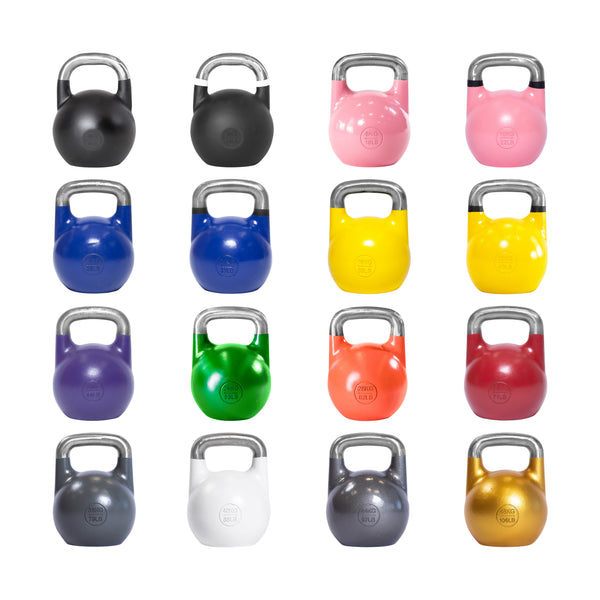
CHOOSING A KETTLEBELL WEIGHT comes down to training experience, not bodyweight alone. Most men starting out do well between 12 kg and 16 kg (26 to 35 lb), and most women new to strength and conditioning start between 6 kg and 12 kg (13 to 26 lb). Anyone with a prior lifting background can move up from there. Treat both as loose starting points rather than rules. Full chart below.
Kettlebell training builds total-body strength, burns body fat, and improves core strength and stability. It covers a lot of ground for one piece of equipment.
Choosing the right weight matters more than most people expect. With the range of kettlebells on the market, landing on the appropriate load for the exercises you want to do can be tricky.
This guide covers kettlebell weight recommendations for men and women, and why kettlebell training is worth adding to your routine in the first place.
The video below walks through how kettlebell weight selection works in practice. Two minutes of watching will save you a lot of guessing, and the chart further down gives you the numbers to take shopping.
Why use a kettlebell?
Kettlebells have earned their popularity. Five reasons come up again and again.
1. Versatility
One bell covers a wide range of exercises, including Turkish get-ups, rows, swings, and goblet squats, and most of them train several muscle groups at once. Beginner or advanced athlete, it is a straightforward way to add load without putting a bar on your back.
2. Efficiency
Kettlebell work improves cardiovascular fitness while building strength and endurance, which makes it a time-efficient option for anyone trying to improve general fitness.
The bells are also compact and easy to store in a small space. Adjustable kettlebells in particular suit small home gym setups, since one unit replaces a rack of individual bells.
3. Accessibility
Kettlebells usually cost less than other weightlifting equipment, which puts them within reach for most people.
4. Low-Impact
Kettlebell training is low-impact, so it works well for anyone coming back from an injury or looking to reduce stress on the joints. Pairing it with moderate-intensity steady-state cardio keeps the joint load manageable while the conditioning still improves.
5. Fun
Plenty of lifters find kettlebell exercises more enjoyable than traditional strength work, because the swinging and fluid movements keep things dynamic. That matters for anyone who gets bored with programming and needs variety to stay consistent.
What weight kettlebell should I use?
This is one of the most common questions the B.o.S. team gets, and one of the most important.
Kettlebells, like most exercise equipment, are not one-size-fits-all.
If you are new to kettlebells and not yet sure how much you will enjoy the workouts, or you are not ready to invest in a full set, the first decision is which single weight to buy.
Getting that choice right does two things: it makes the workout more productive, and it helps you avoid injury. For a broader look at bell types and construction, the guide on how to choose a kettlebell for your home gym covers what separates competition, powder coated, and adjustable bells.
Kettlebell Weight for Men

Start with a reasonable weight and let technique, not ego, set the tone. Going too heavy early degrades movement quality and makes it harder to finish sessions and stay consistent.
Lift smarter, not harder.
Beginner to intermediate lifters do well with 12 kg (26 lb), 16 kg (35 lb), or 24 kg (53 lb) kettlebells.
If you are new to kettlebells but bring prior weight training experience or an athletic background, starting at 20 kg (44 lb) is reasonable.
More advanced lifters can work up to 24 kg (53 lb) or 32 kg (70 lb). The 24 kg shows up in both ranges for good reason: it is where a progressing beginner and an advanced lifter often meet.
If the weight feels light at first, that is fine. Rather than reaching for the heaviest bell available, pick a lighter one and spend the time on technique. Load can climb steadily as strength and experience build.
Kettlebell Weight for Women

Women new to strength and conditioning typically start with 6 kg to 12 kg (13 to 26 lb) kettlebells. Those with an athletic background can begin at 12 kg (26 lb) or 16 kg (35 lb).
Experienced kettlebell lifters can use weights up to 20 kg (44 lb) or 32 kg (70 lb).
At those loads, form and safe handling matter most. Take the time to build a solid understanding of kettlebell technique before the weight climbs.
Kettlebell weight chart
The same recommendations, side by side. Treat experience as the deciding factor rather than bodyweight.
Some weights appear in more than one row on purpose. The bands overlap because a strong beginner and a lifter working through lighter advanced sets can land on the same bell.
| Starting point | Men | Women |
|---|---|---|
| New to kettlebells | 12, 16, or 24 kg (26, 35, or 53 lb) |
6 to 12 kg (13 to 26 lb) |
| Prior weight training or athletic background | 20 kg (44 lb) |
12 or 16 kg (26 or 35 lb) |
| Experienced or advanced | 24 or 32 kg (53 or 70 lb) |
20 or 32 kg (44 or 70 lb) |
Some exercises call for a lighter bell
One weight rarely suits every movement. A bell that feels right for a swing can feel unmanageable overhead, and that comes down to the muscles involved rather than a lack of strength.
Hinge and lower-body movements recruit the hips, glutes, and legs, so swings and goblet squats tolerate the most load. Rows tend to sit in the middle.
Pressing, overhead work, and slow controlled movements like the Turkish get-up are limited by the shoulders and core, so they usually call for a lighter bell than the same person can swing comfortably.
Buying a single bell means sizing it for the movements you plan to do most, then scaling reps or range on the rest. Two bells at different weights removes the compromise, and an adjustable bell removes it without the floor space.
These ranges are broad sweeps, not prescriptions. Kettlebell experience is only one input, and it often differs from general lifting experience.
Someone new to kettlebells who has been lifting for years will usually start heavier than the beginner range suggests. Someone new to lifting altogether will often be better served starting lighter than it suggests, whatever the column says.
Age, training history, and injury history all move the answer. Use the chart as a loose starting point, then let the first few sessions tell you whether to go up or down.
That is what the 30-day refund policy is for. Returns are accepted within 30 days of receiving an order, so there is room to find out how a bell actually feels in your hands before committing to it.
One tip: keep the original packaging until you are sure. Bells returned in their original box avoid the restocking fee, and return shipping comes off the refund. Full terms live in the refund policy.
Kettlebell Weight Guide Summary
If you are new to kettlebell training and only plan to run a few simple exercises, almost any kettlebell will do the job.
To get the most from kettlebell training and progress into more advanced exercises, a good-quality bell becomes worth the money. Consistent handle dimensions and a smooth finish change how the bell feels in the rack position and overhead.
Beginner or seasoned lifter, B.o.S. kettlebells help you avoid the two most common problems: the wrong weight and the wrong style of bell, either of which can stall progress or lead to injury.
Ready to get into the swing of things? The kettlebell collection has the full weight range, and the wider conditioning lineup covers what pairs well with it. Building a room from scratch instead? The Home Gym Builder bundles the bigger pieces together.
Kettlebell weight FAQ
What weight kettlebell should a beginner start with?
Men new to kettlebells generally start between 12 kg and 24 kg (26 to 53 lb), and women new to strength and conditioning generally start between 6 kg and 12 kg (13 to 26 lb). Prior lifting experience shifts both ranges upward.
Why does 24 kg (53 lb) appear in both the beginner and advanced ranges?
Because it is a genuine crossover weight. A 24 kg bell can be a target for someone advancing out of the beginner range and a working weight for an experienced lifter on lighter sets. The ranges describe bands rather than fixed tiers.
Should I use the same kettlebell weight for every exercise?
Not usually. Swings and squats can handle a heavier bell than presses and overhead work, because the hips and legs are stronger than the shoulders. Size a single bell for your most frequent movements and adjust volume on the others.
Is it better to start too light or too heavy?
Too light. A lighter bell lets you build technique first, and load can be added as strength grows. Starting too heavy costs movement quality and consistency.
Is one kettlebell enough to train with?
For a handful of straightforward exercises, yes. Progressing into advanced kettlebell work eventually calls for more than one weight, which is where an adjustable bell earns its place.
Are kettlebells easy on the joints?
Kettlebell training is low-impact, which makes it a solid option for anyone returning from injury or looking to reduce joint stress. Technique still matters, especially overhead.
Do adjustable kettlebells save space?
Yes. A single adjustable bell covers a range of weights, so it suits small home gyms where a full set of fixed bells will not fit.