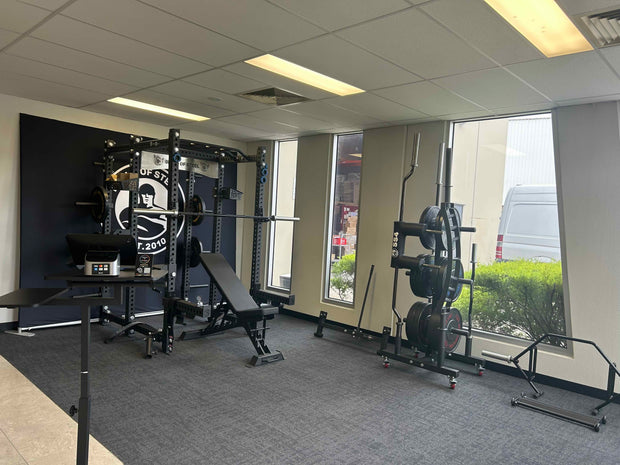
Turning a garage into a home gym is one of the most effective ways to make training more consistent. With the right planning, even a standard garage can become a space that supports strength training, cardio, mobility, and recovery without feeling crowded or overwhelming.
A well-designed home gym does not need to be packed with machines or limited to one type of athlete. The best setups balance versatility, smart layout, and comfort so multiple people can train safely and confidently. Whether the space is used by one lifter or an entire household, thoughtful choices make all the difference.
This guide walks through how to plan a garage gym, choose equipment wisely, and create a layout that feels inviting while still handling serious workouts.
Start With the Space and a Clear Goal
Before buying equipment, measure the garage and define how the gym will be used. Ceiling height, wall spacing, and walkways matter more than most people expect. A typical two-car garage often provides enough room to create separate zones for lifting, cardio, and accessories.
Goals should guide every decision. Some households need a gym that supports heavy compound lifts. Others want low-impact options for older users, rehab work, or general fitness. Many want all of the above.
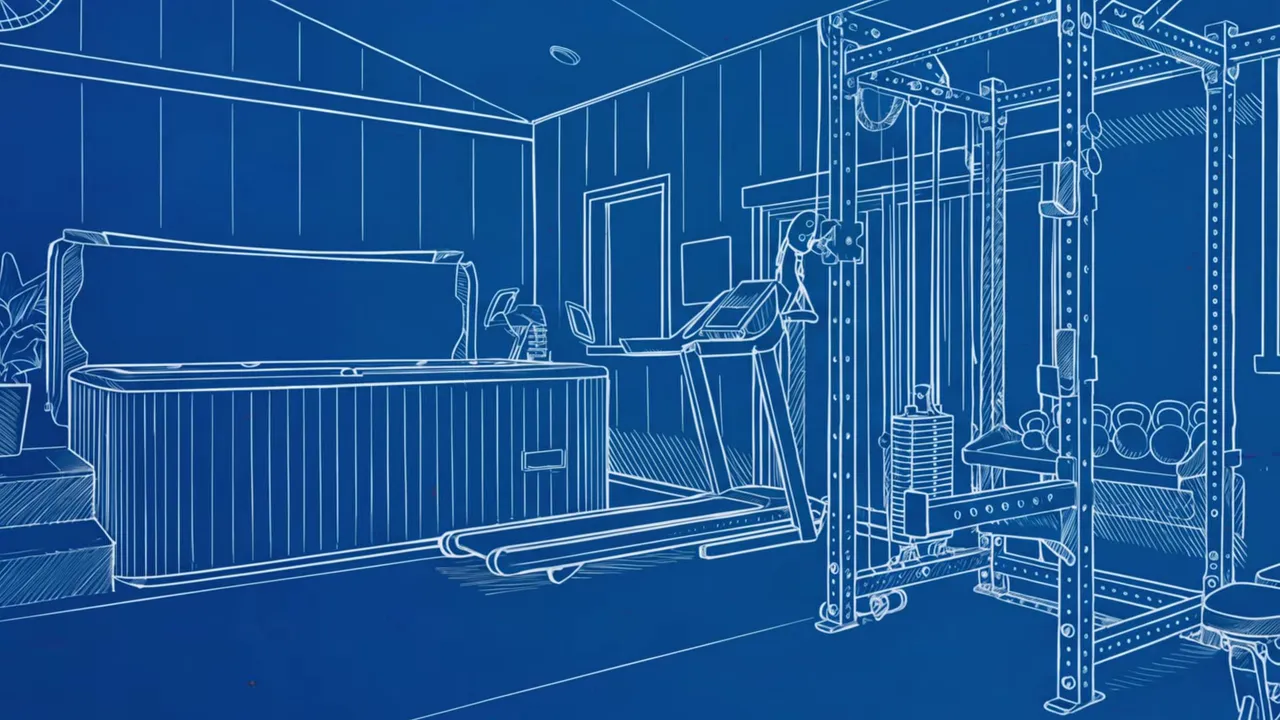
Smart Layout Principles
A few layout habits help almost any garage gym work better:
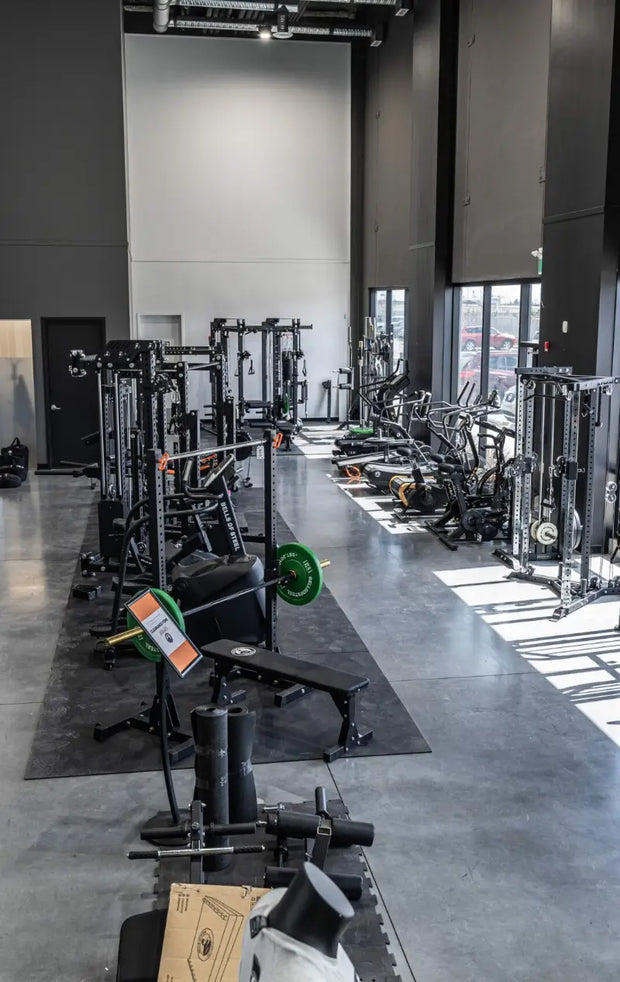
- Keep open walkways so people can move safely between zones.
- Place cardio equipment near windows or doors when possible for airflow and comfort.
- Leave enough space around dumbbells and kettlebells for more than one person to train.
- Avoid blocking doors, storage areas, or utility access.
Planning zones early prevents the gym from feeling cramped once equipment arrives.
Choose Equipment That Covers More Than One Job
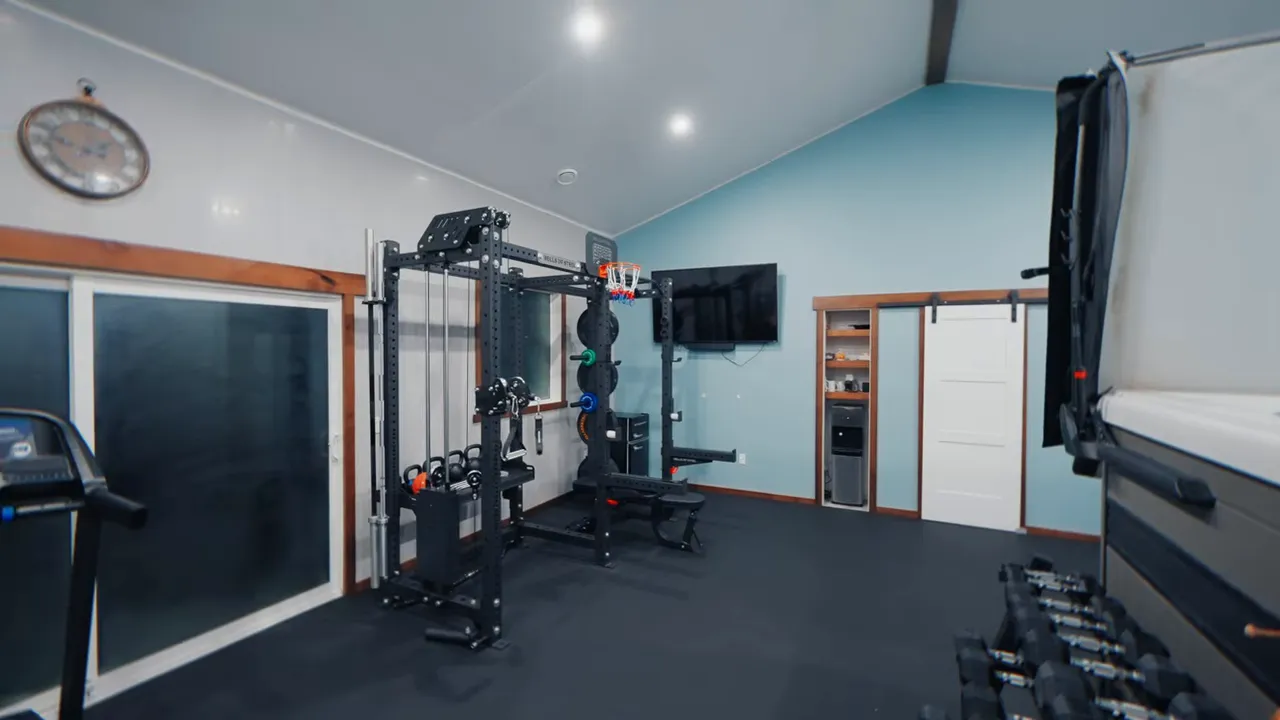
The most effective home gyms rely on versatile equipment instead of single-use machines. A few well-chosen pieces can cover hundreds of exercises.
The Power Rack as the Foundation
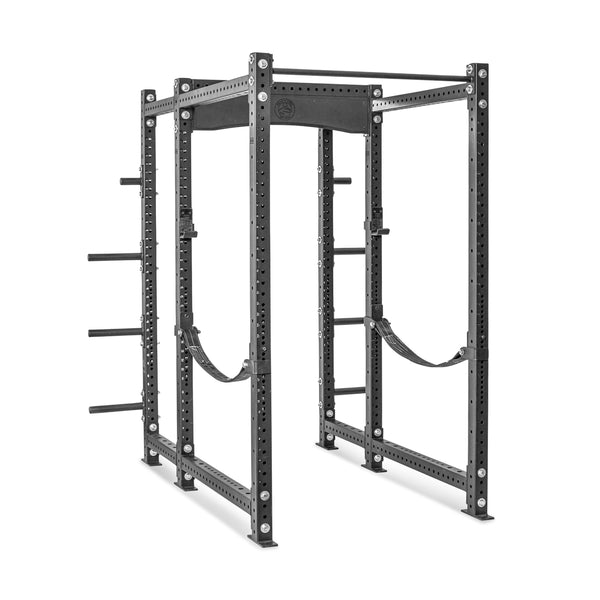
A quality power rack anchors most garage gyms. It supports squats, presses, pulls, and accessories while providing safety for solo training. Adding spotter arms or safety straps increases confidence without taking up extra space.
An adjustable bench pairs well with the rack and adds flexibility. Lighter benches are easier to move and work better for shared spaces, especially when users vary in strength or mobility.
Expanding Options With Cables
A cable attachment or cable tower dramatically increases exercise variety. Cables allow controlled movement for isolation work, rehab, and technique-focused training. They also reduce joint stress compared to free weights alone.
Cable systems shine in multi-user gyms because they adapt easily to different strength levels and training goals.
Free Weights and Conditioning Tools
Free weights keep the gym functional and efficient:
- Fixed dumbbells allow two people to train at the same time without plate changes.
- Kettlebells add variety for conditioning, carries, and dynamic movements.
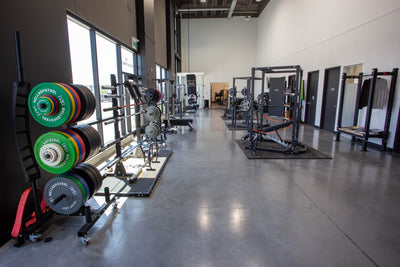
- Barbells and plates remain essential for foundational strength work.
For conditioning, scalable tools like air bikes, rowers, or treadmills work well across age groups and fitness levels. These machines allow light recovery sessions or hard intervals without changing equipment.
Why Versatility Matters in Shared Gyms
A gym that works for one person but frustrates everyone else rarely gets used long term. Versatile equipment allows each user to train at their own pace and ability.
Cables support controlled movement. Adjustable benches reduce setup strain. Clear floor space improves safety. Storage keeps the gym organized and welcoming.
These details make training feel approachable instead of intimidating, which helps consistency for beginners and experienced lifters alike.
Installation and Setup Tips

Assembly day often takes longer than expected. Laying out all parts before starting saves time and reduces frustration. Begin with the largest pieces, usually the power rack, then build outward with attachments and storage.
Keeping the layout flexible helps later adjustments. Equipment may move slightly once real workouts begin, and that is normal. A good setup evolves over time.
Comfort and Convenience Go a Long Way
Small comforts often have the biggest impact on consistency. Simple additions like fans, floor mats, storage hooks, or a small fridge can make longer sessions more enjoyable.
A gym that feels comfortable encourages regular use. That matters more than owning the most equipment.
Practical Tips for a Well-Rounded Garage Gym
- Measure ceiling height carefully, especially if using racks or pull-up bars.
- Choose modular equipment that can grow over time.
- Prioritize safety features for solo training.
- Include storage early to keep floors clear.
- Leave room to add future attachments or accessories.
- Balance serious training tools with approachable options.
Example Equipment List for a Versatile Setup
- Power rack with safeties
- Adjustable bench
- Cable attachment or cable tower
- Barbell and plate set
- Fixed dumbbells with rack
- Kettlebells and storage shelf
- Cardio machine such as an air bike or treadmill
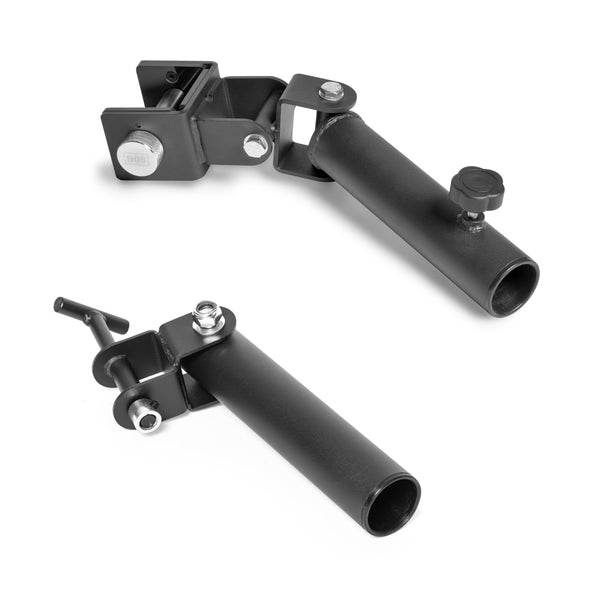
- Landmine or small accessory attachments
- Flooring and wall storage solutions
This combination supports strength, conditioning, mobility, and recovery without overwhelming the space.
Final Thoughts
A successful garage gym does not rely on size or price. It relies on smart choices. By focusing on layout, versatility, and accessibility, almost any garage can become a reliable training space.
The best home gyms support different goals, different bodies, and different training styles. With thoughtful planning, a garage can shift from unused storage to a place where strength builds, habits stick, and training fits into daily life.
Build with intention, keep it flexible, and let the space work for you.